
Environmental soil sampling is the process of collecting soil from specific depths and locations across a site so a laboratory can test it for contaminants such as fuels, solvents, heavy metals, and other pollutants. In plain terms, it answers one critical question: is the ground clean, or is something harmful hiding in it? For property owners, developers, and buyers across San Diego County, that answer can decide whether a site is safe to build on, sell, or occupy.
At Unlimited Drilling & Foundations Inc., we have spent decades drilling into San Diego’s varied and often difficult ground since 1993, and dependable sampling always starts with reaching the right soil cleanly — which is exactly the kind of fieldwork our crews handle every day. This guide walks through the environmental soil sampling process step by step, the methods involved, and when you actually need it. The goal is to demystify what happens before, during, and after the drilling.
By the end, you will understand how samples are collected, what happens to them in the lab, and the situations — from property transactions to suspected contamination — that call for testing the soil beneath your feet.
Environmental Soil Sampling Tells You Whether the Ground Is Contaminated
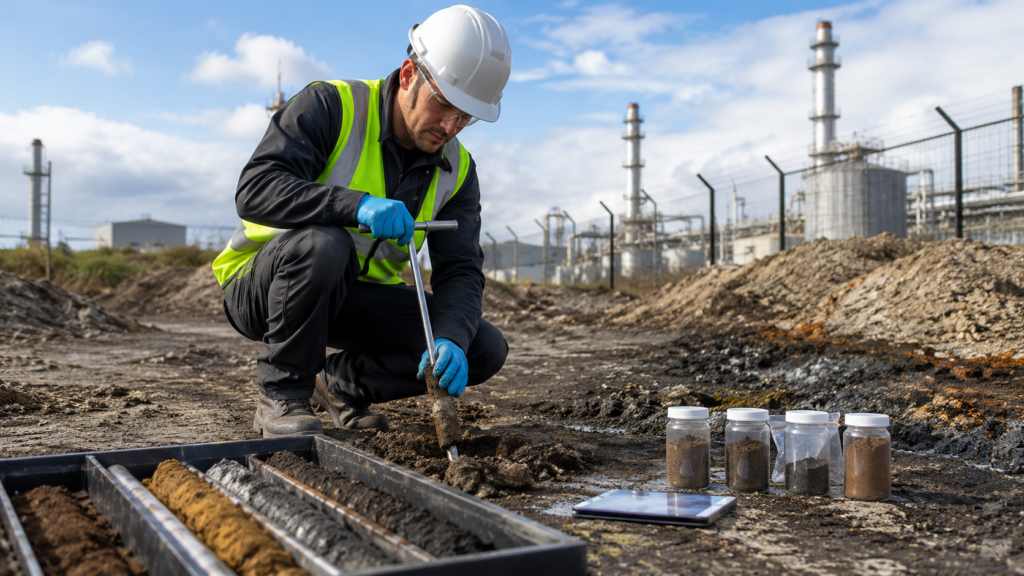
Environmental soil sampling exists to detect and measure contamination that is impossible to see from the surface, giving owners and regulators hard data instead of guesswork. A property can look perfectly clean while carrying a legacy of leaked fuel, old industrial chemicals, or buried waste several feet down.
The purpose is different from geotechnical work. Where geotechnical drilling asks “can this soil support a structure?”, environmental sampling asks “is this soil chemically safe?” Both rely on reaching the ground accurately, but they look for entirely different answers.
A typical environmental investigation is designed to identify issues such as:
- Petroleum hydrocarbons — often from leaking underground storage tanks or fueling operations
- Volatile organic compounds (VOCs) — solvents and industrial chemicals that can migrate through soil
- Heavy metals — such as lead or arsenic from historical site use
- Pesticides and agricultural residues — common on former farmland
- Other site-specific pollutants tied to a property’s past use
The findings guide whether a site is fit for its intended use, needs remediation, or requires further investigation before a deal or project moves forward.
How Does the Environmental Soil Sampling Process Work?
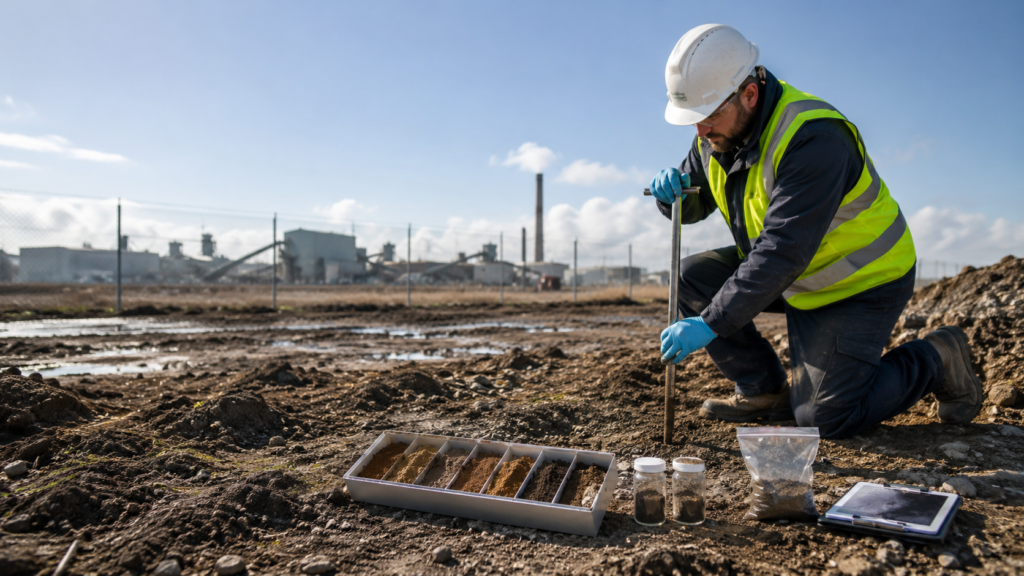
Environmental soil sampling follows a structured sequence that protects the integrity of every sample from the ground to the lab. While the details vary by site and by what is being tested for, the process generally moves through these stages:
- Site assessment and planning. An environmental professional reviews the property’s history and known risks, then determines how many samples are needed, where to take them, and how deep to go.
- Locating sample points. Sampling locations are chosen to target suspected source areas as well as background spots for comparison.
- Drilling or advancing the bore. A drill rig or direct-push rig advances to the planned depths. On tight lots and steep San Diego sites, reaching those points cleanly is often the hardest part of the job.
- Collecting the sample. Soil is recovered at set depths using sampling tools designed to limit disturbance and cross-contamination.
- Preserving and labeling. Samples are sealed in appropriate containers, labeled, logged, and kept under chain-of-custody so the results hold up to scrutiny.
- Laboratory analysis. A certified lab tests each sample for the specified contaminants and reports concentrations.
- Reporting and recommendations. The environmental consultant interprets the results against regulatory standards and advises on next steps.
Clean technique matters at every stage. A poorly collected or cross-contaminated sample can produce misleading results, which is why the drilling and collection work demands experienced hands and the right equipment.
Different Sampling Methods Suit Different Sites and Contaminants
There is no single way to sample soil — the right method depends on the contaminant, the depth, and the conditions of the site. An experienced field crew matches the approach to the job rather than forcing one technique everywhere.
Common approaches include:
- Grab samples — a single sample taken from one location and depth, used when a specific spot is in question
- Composite samples — several sub-samples combined to represent a broader area, useful for general screening
- Soil borings — drilling vertically to collect samples at multiple depths, which reveals how contamination changes the deeper you go
- Direct-push sampling — pushing or driving a probe into the ground to collect cores with minimal disturbance, often efficient on accessible sites
Depth strategy is just as important as method. Contaminants can sit near the surface or migrate well below it, so sampling at multiple depths often gives the truest picture of what a site is dealing with.
When Do You Need Environmental Soil Sampling?
You need environmental soil sampling whenever there is reason to suspect contamination or a transaction depends on proving the soil is clean. In practice, these are the situations that most often trigger it:
- Buying or selling commercial or industrial property, where a Phase II environmental site assessment may call for soil testing
- Removing or investigating underground storage tanks, a frequent source of fuel contamination
- Redeveloping former industrial, commercial, or agricultural land, where past use raises questions
- Responding to a known or suspected spill or leak on the property
- Meeting a regulatory or lender requirement before financing or permitting a project
- Confirming a site is safe before building housing, schools, or other sensitive uses
If any of these apply, it is best to involve a qualified environmental consultant early. Testing before you commit to a purchase or a build is almost always cheaper than discovering a problem after the fact.
Proper Drilling and Site Access Are Critical to Reliable Samples
The quality of an environmental soil sample is only as good as the drilling that produces it, which is where Unlimited Drilling & Foundations Inc. brings real value to a project. Reaching a precise depth without contaminating the sample, and doing it on the kind of steep, tight, or awkward sites common across San Diego County, is a skill built over many years and many projects.
We specialize in drilling in difficult-to-reach locations and on steep hillsides, with limited-access rigs that need as little as 36 inches of width to get to where the work has to happen. That access capability matters for environmental sampling, because the spot that needs testing is rarely the easiest spot to reach.
Because we have completed more than 1,000 projects on time and within budget since 1993, and we keep our work in house rather than handing it to a chain of subcontractors, clients get a crew that takes the fieldwork — and the conditions of every sample — seriously. When an environmental consultant needs clean, accurately placed borings on a challenging San Diego site, that drilling expertise is exactly what keeps the results trustworthy.
Frequently Asked Questions About Environmental Soil Sampling
What is the difference between environmental soil sampling and geotechnical drilling?
They serve two different purposes. Environmental soil sampling tests soil for chemical contamination to determine whether a site is safe, while geotechnical drilling evaluates the soil’s physical strength and stability to guide foundation design. A single property may need both, but the lab tests and the goals are distinct.
How deep do environmental soil samples usually go?
Depth depends on the suspected contamination and the site’s history. Some contaminants stay near the surface while others migrate well below it, so samples are often taken at several depths. The environmental professional planning the investigation sets the required depths based on the property and the contaminants of concern.
How long does environmental soil sampling take?
The field collection on a typical site is often completed within a day or two, depending on access and the number of sample points. The laboratory analysis and the consultant’s report take additional time afterward. Difficult access, such as steep or confined sites, can extend the fieldwork.
Is environmental soil sampling required when buying property?
It is not automatic for every purchase, but it is commonly required for commercial, industrial, or previously developed land, often as part of a Phase II environmental site assessment. Lenders and regulators may also require it. It is wise to confirm the specific requirements with your environmental consultant and lender before closing.
Who reviews and interprets the soil sample results?
A qualified environmental consultant or engineer interprets the laboratory results against applicable regulatory standards. The drilling and sampling crew collects the material accurately and maintains chain-of-custody, while the consultant determines what the findings mean and what should happen next.
Get Clean, Accurate Sampling Done Right in San Diego
Environmental soil sampling turns an invisible risk into clear, actionable information — and the reliability of that information starts with how the soil is reached and collected. For sites across San Diego’s demanding terrain, accurate drilling and careful access are not optional extras; they are the foundation of results you can trust.
If your project calls for sampling on a tight lot, a steep hillside, or any hard-to-reach site, the team at Unlimited Drilling & Foundations Inc. has the equipment and the experience to handle the drilling side with care. We have been working San Diego ground since 1993, we do the work in house, and we are glad to talk through what your specific site needs. Reach out for a free estimate and get your project moving with confidence.