
April is one of the most beautiful and sought-after months in the Sonoran and Colorado Deserts — but it also marks the beginning of a temperature transition that first-time visitors sometimes underestimate. Whether you’re planning to hike, watch wildlife, stargaze, or simply unwind in a private desert retreat, knowing is the desert safe to visit in April will help you plan smart and make the most of your trip. The short answer is yes — April is genuinely one of the best months to visit the Anza-Borrego Desert region around Borrego Springs, California. But like any desert visit, it rewards preparation and punishes complacency. Here’s everything you need to know.
April in the Desert: What the Weather Actually Looks Like
April sits in a sweet spot in the Anza-Borrego desert calendar. The brutal summer heat hasn’t fully arrived yet, and the cool nights of winter are giving way to genuinely comfortable evenings. Based on long-term climate data and current forecasts for the Anza-Borrego Desert State Park area:
- Average daytime high temperatures: 80°F to 88°F, with some days pushing into the low 90s toward the end of the month
- Average overnight lows: 51°F to 62°F — cool enough to sleep comfortably with windows open or under a light blanket
- Rainfall: Minimal. Anza-Borrego receives less than seven inches of rain annually on average, and April is typically one of the driest months of the year
- Wind: Spring can bring occasional gusty winds — something golfers especially should be aware of, as desert winds can pick up quickly and shift conditions at the course
- UV index: High. Clear desert skies in April mean intense sun exposure even at comfortable air temperatures
The contrast between daytime and nighttime temperatures is one of the desert’s defining characteristics in April. You might spend the afternoon hiking in 85°F warmth and find yourself reaching for a light jacket by 9 PM. Packing layers isn’t optional — it’s part of visiting the desert intelligently in spring.
Compared to May through October — when temperatures regularly exceed 100°F and the Anza-Borrego Visitor Center reduces its operating hours to weekends only — April visitors enjoy the full run of park facilities, comfortable hiking windows, and the tail end of wildflower season. October and April are consistently cited by experienced Anza-Borrego visitors as offering the best combination of warm but manageable weather.
Wildlife in April: What You’ll See and How to Stay Safe
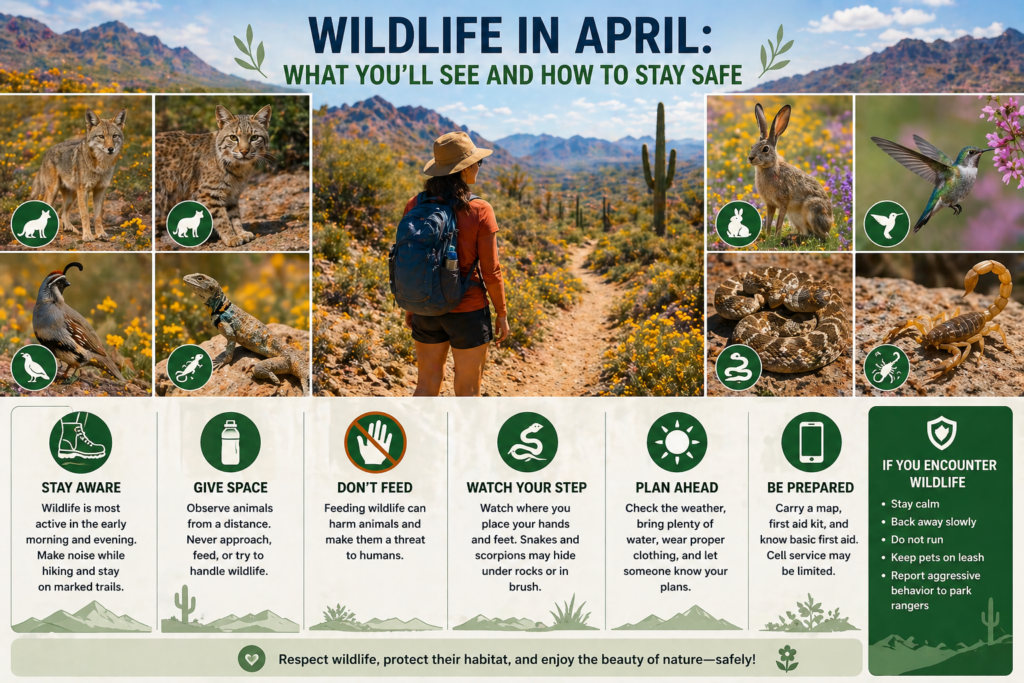
April is an active month for desert wildlife. Animals that were less visible during the cooler winter months become more active as temperatures rise, and spring brings increased movement across the park. This is one of the genuine pleasures of visiting Anza-Borrego in April — but it also comes with a few things to know.
Bighorn Sheep
The Peninsular bighorn sheep that roam Anza-Borrego — and frequently wander onto the fairways of the De Anza Golf Course visible from our retreat — are one of the park’s most iconic wildlife sightings. April is an excellent time to spot them as they graze and move between elevations. Observe them from a respectful distance and never approach or attempt to feed them. These animals are protected under both state and federal law, and approaching them disrupts natural behaviors that are essential to herd health.
Rattlesnakes
Rattlesnakes become more active in April as ground temperatures warm. They are not aggressive — they will not pursue you — but they are venomous and will strike if startled or cornered. The protocols for safe hiking in rattlesnake territory are straightforward and effective: stay on designated trails, watch where you step and where you place your hands on rocks, never reach into crevices or brush without looking first, and give any rattlesnake you encounter ample space to move away on its own. Wearing close-toed shoes or hiking boots rather than sandals is essential. If you encounter a rattlesnake on trail, stop, give it room, and wait for it to move. Do not attempt to handle, kill, or relocate it — leave that to park rangers.
Scorpions
Scorpions are native to the Anza-Borrego region and become more active in warmer months. They are primarily nocturnal and typically hide under rocks, logs, and debris during the day. The practical precautions are simple: shake out shoes and clothing left outdoors overnight, check towels left poolside, and avoid reaching under rocks or into dark gaps. Scorpion encounters at well-maintained vacation properties are rare, but awareness is the best prevention.
Coyotes, Roadrunners, and Desert Birds
Coyotes are common throughout the Borrego Springs area and are generally not a concern for adult visitors. Keep food secured and do not feed them — habituated coyotes that associate humans with food can become nuisances. Anza-Borrego is an exceptional destination for birdwatching, and April brings active bird movement through the region. Roadrunners, Costa’s hummingbirds, cactus wrens, and various raptors are frequently spotted. Bring binoculars if you have them.
Wildflower Season in April: What’s Left and What to Expect
Anza-Borrego Desert State Park is one of the premier wildflower destinations in the United States, and the famous desert superbloom typically peaks between late January and mid-March depending on winter rainfall. By April, the peak bloom has usually passed in the lower desert elevations, but higher elevation areas and north-facing slopes often carry color into the early weeks of the month.
Even in years without a full superbloom, April visitors will find individual wildflower species still in bloom — brittlebush, desert sunflowers, palo verde, and various cacti including the striking blooms of cholla and barrel cactus. The Anza-Borrego Desert Natural History Association and the California State Parks website both publish current bloom reports that are worth checking before your visit to know exactly what’s happening on the ground during your stay.
If catching the wildflowers is a priority and your dates are flexible, early April is a better bet than late April — but even a post-peak visit to Anza-Borrego in spring is a visually remarkable experience.
Hiking Safety in April: The Rules That Matter Most
April hiking in the Anza-Borrego region is genuinely enjoyable — trail conditions are dry, skies are clear, and the park’s enormous variety of terrain accommodates everyone from casual walkers to experienced backcountry hikers. The safety considerations are the same as any desert hiking environment, but they deserve to be taken seriously:
- Water is non-negotiable. The recommended minimum is one gallon of water per person per day for desert hiking. Carry more than you think you need. The dry desert air accelerates dehydration at a rate most visitors underestimate, and thirst is a lagging indicator — you’re already dehydrating by the time you feel thirsty.
- Hike in the morning. Starting hikes early — before 9 or 10 AM — keeps you on trail during the coolest part of the day and ensures you’re heading back before afternoon temperatures peak. Late April afternoons can push into the low 90s, and exposed desert terrain with little shade amplifies that quickly.
- Sun protection matters more than you think. Clear desert skies in April mean intense UV exposure. A wide-brimmed hat, UPF clothing or sunscreen (reapplied regularly), and UV-blocking sunglasses are practical necessities rather than optional accessories.
- Tell someone your plans. Cell service is spotty to nonexistent in many parts of Anza-Borrego. Before heading out on any trail, let someone know where you’re going and when you expect to return. Download offline maps before you leave — don’t rely on GPS navigation in remote areas of the park.
- Know your physical limits. Desert terrain is uneven and exposed. A trail that looks short on a map covers ground that can feel much more demanding under desert sun. Start with trails appropriate to your fitness level, particularly if you’re new to desert hiking.
- Watch for flash flood zones. While April is typically dry, spring storms can occasionally occur, and desert terrain channels water into arroyos and canyon bottoms with very little warning. Avoid camping or parking in dry creek beds, and check the weather before heading into canyon terrain.
Staying in Borrego Springs in April: Why a Private Retreat Is the Right Base
One of the advantages of basing your April desert visit at a private vacation retreat rather than a campsite or hotel is the ability to manage your day around the desert’s natural rhythms. At Divine Desert Destination, our 2,080 square-foot retreat at De Anza Golf and Country Club puts you in the ideal position to do exactly that: step outside into the courtyard for an early morning coffee as the sun clears the eastern mountains, head out for a morning hike or round of golf during the comfortable morning hours, and retreat to the private pool and spa during the warmest part of the afternoon.
The east and west-facing walls of glass — and the 180-degree panoramic views of the mountains and golf course — mean you’re in the landscape even when you’re inside. And Borrego Springs’ status as a designated Dark Sky Community means that April evenings, with warm-enough nights to sit outside comfortably, offer some of the most spectacular stargazing available anywhere in Southern California.
April is also one of the best months of the year for golf at De Anza, with daytime temperatures in the ideal range for a comfortable round. The Galleta Meadows iron sculptures — the remarkable large-scale metal artworks scattered across the desert floor near Borrego Springs — are easily accessible on foot or by car and are particularly beautiful in the low-angle spring light of morning and late afternoon.
If you’re planning an April trip to Anza-Borrego and want to book direct with the owners for the best available rate, visit our availability calendar or reach out to us directly. We’re happy to share our personal recommendations for hikes, wildflower viewing spots, and little-known corners of the park that guidebooks often miss.
Frequently Asked Questions About Visiting the Desert in April
Is April too hot to visit the Anza-Borrego Desert?
No — April is one of the best months to visit. Average highs in the 80s and lows in the 50s make for comfortable hiking conditions, pleasant evenings, and enjoyable outdoor activities. The extreme heat that makes summer visits challenging doesn’t fully arrive until May, when temperatures regularly exceed 100°F. Early and mid-April in particular offer some of the most reliably pleasant desert weather of the year.
Are rattlesnakes a serious danger in April in Anza-Borrego?
Rattlesnakes are present and become more active in April, but they are not aggressive animals and the vast majority of desert visitors never have a concerning encounter. Staying on trails, watching where you step, wearing appropriate footwear, and giving any snake you see room to move away are all the precautions needed for safe desert hiking. Encounters that result in bites almost always involve someone attempting to handle or approach the snake — something you should never do.
Can I still see wildflowers in Anza-Borrego in April?
Potentially yes, particularly in early April and at higher elevations. The peak bloom in lower desert areas typically runs January through mid-March, but April visitors often find cactus blooms, brittlebush, desert sunflowers, and palo verde still in color. Check the Anza-Borrego Desert Natural History Association website and California State Parks for current bloom reports before your visit to set accurate expectations.
What should I pack for a desert trip in April?
Pack layers — mornings and evenings can be cool while afternoons are warm. Essentials include a wide-brimmed hat, high-SPF sunscreen, UV-blocking sunglasses, and more water than you think you’ll need (at least one gallon per person per day for any hiking). Sturdy closed-toe shoes or hiking boots are strongly preferred over sandals. A light jacket or fleece for evenings, an offline map downloaded before you lose cell service, and basic first aid supplies round out a well-prepared desert packing list.
Is Borrego Springs a good base for exploring Anza-Borrego Desert State Park in April?
Borrego Springs is the ideal base — it sits within the boundaries of Anza-Borrego Desert State Park itself, putting you within minutes of trail heads, the Galleta Meadows sculptures, the park visitor center, and the iconic desert landscape. Staying in town or at a retreat property in the area eliminates the long drives that day-trippers from San Diego or Palm Springs face, and gives you the flexibility to time your outdoor activities around the best morning and evening hours of the desert day.